
Fast Delivery
Competitive Price
Sales Available Nationwide
Rentals Available in Arizona
Fast Delivery
Competitive Price
Sales Available Nationwide
Rentals Available in Arizona
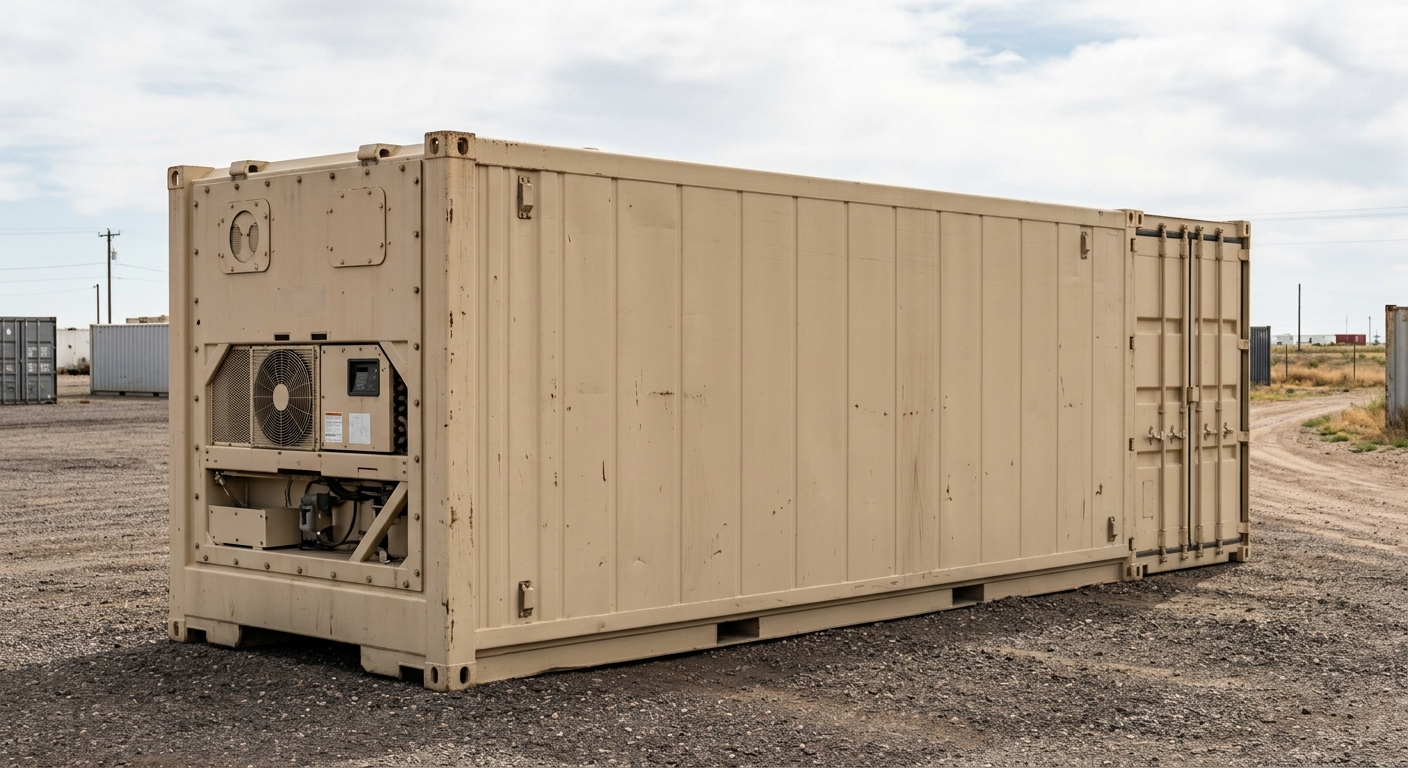
20 Foot Refrigerated Shipping Container
GET YOUR FREE QUOTE
* Indicates a required field
Protect Temperature-Sensitive Products with a 20 Foot Refrigerated Container
A 20 Foot Refrigerated Shipping Container combines insulated cargo space with powered refrigeration equipment, providing controlled cold storage close to daily operations. Its compact footprint suits businesses that need useful capacity without the space required for a 40 foot unit.
Xpress Shipping Containers helps buyers discover refrigerated-container suppliers across the United States. Because machinery, condition, temperature capabilities, and features vary, clear operating requirements support a better comparison between available units.
What Is a Refrigerated Shipping Container?
A refrigerated shipping container, or reefer, maintains a selected internal temperature while connected to compatible power. Its system circulates conditioned air through the cargo area, while insulated walls, doors, ceiling, and flooring limit unwanted heat transfer.
A standard 20 foot reefer is about 20 feet long, 8 feet wide, and 8 feet 6 inches high outside. Its interior is smaller than a dry container because insulation, airflow channels, liners, and refrigeration components occupy space.
Reefer equipment maintains temperature rather than instantly cooling warm products. For many applications, goods should enter at the temperature specified by the storage plan and manufacturer’s instructions.
Businesses That Use Portable Cold Storage
A 20 Foot Refrigerated Shipping Container can add chilled or frozen capacity for normal operations, seasonal demand, renovations, or inventory changes. Common users include:
- Food processors and distributors
- Restaurants, caterers, and commercial kitchens
- Grocery and specialty food businesses
- Farms and produce operations
- Floral companies and event professionals
- Pharmaceutical and healthcare organizations
The correct setup depends on the product. Fresh produce, frozen foods, flowers, beverages, ingredients, and temperature-sensitive materials require different conditions. Define the temperature range, acceptable variation, humidity concerns, sanitation standards, and monitoring process before selection.
Start With the Required Temperature
Reefers differ in operating range and control accuracy. Before comparing a refrigerated shipping container for sale, identify the target temperature and whether the application is chilled, frozen, or specialized. Ask the supplier to confirm the machinery suits the application.
Ask how temperature is set, displayed, monitored, and recorded. Sensitive products may require data logging, alarms, remote monitoring, calibrated sensors, or documented procedures. The system should match the organization’s quality and compliance responsibilities.
Inspect the Container and Refrigeration System
Cosmetic condition alone does not show how used refrigeration machinery performs. Ask for the model information, operating history when available, maintenance records, recent testing details, and known repairs.
Review the refrigeration unit, controller, sensors, wiring, plug, fans, seals, insulation, liner, floor, drains, and cargo doors. Look for corrosion, damage, odors, moisture, gaps, or repairs affecting sanitation or performance. Consider assessment by a qualified technician.
Confirm whether the listing describes an operating reefer or insulated storage with inactive machinery. Similar-looking units can provide very different functions, so equipment status matters.
Compare Suppliers Through Xpress Shipping Containers
Prepare an enquiry with the location, stored products, target temperature, schedule, available power, monitoring needs, preferred condition, and interior features. Mention any sanitation or industry requirements affecting selection.
Through Xpress Shipping Containers, buyers can browse listings, review business profiles, contact companies, or submit an enquiry. Detailed information helps suppliers identify relevant 20 foot refrigerated container options when equipment and inventory differ.
A 20 Foot Refrigerated Shipping Container adds focused cold-storage capacity where site space is limited. Explore suppliers through Xpress and ask about temperature range, machinery, power, monitoring, condition, and maintenance access.
FAQs
What temperature can a 20 foot refrigerated container maintain?
Temperature capability varies by refrigeration model, condition, ambient environment, and product load. Ask the supplier for the specific unit’s operating range and confirm that it matches your chilled, frozen, or specialized storage requirements.
What power supply does a reefer container need?
Can I use a refrigerated container for food storage?
Potentially, if the unit’s temperature capability, interior condition, sanitation, monitoring, and operating procedures meet the product’s needs and applicable regulations. Consult relevant food-safety authorities and inspect the container before storing food.